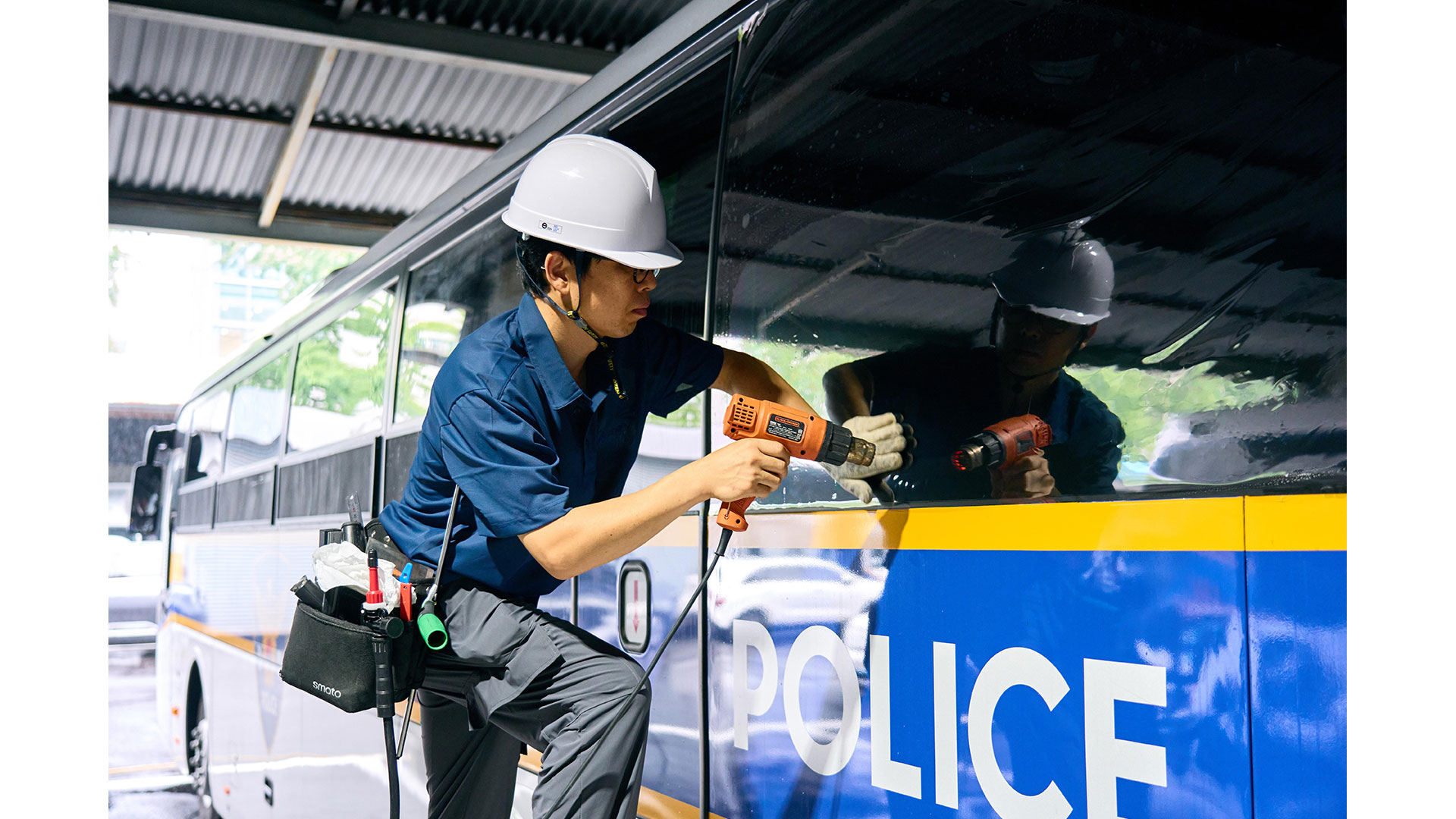
Hyundai Motor Group has brought Nano Cooling Film to two Seoul police buses. In its September 2, 2026 announcement, the group said it had installed the film on the side and rear windows of two Universe buses and planned a year of monitoring before considering mass production.
How Hyundai describes the film
The proposed mechanism combines reflection and radiation. Hyundai’s April 2024 explanation describes three layers: two reflect incoming near-infrared energy, while another releases heat outward at mid-infrared wavelengths. That description explains the design approach; a cabin-temperature measurement answers a different question about a particular vehicle and exposure.
Four stages, different evidence
The dates and test groups matter. The latest release’s earlier results concern Universe FCEV and ultra-low-floor hydrogen buses evaluated before the police installation. The 2024 material describes separate vehicles and demonstrations.
| Stage | What was reported | How to read it |
|---|---|---|
| Seoul, September 2026 | Two police buses fitted; monitoring planned. | An installation announcement with follow-up still ahead. |
| Earlier bus evaluation | Hyundai reported average cabin temperatures about 2–3°C lower than buses without tint or the cooling film. | Earlier manufacturer results, not measurements from the new police buses. |
| Lahore, April 2024 | Hyundai’s campaign fitted 70 customer vehicles. | A separate application in Pakistan, not the Seoul cohort. |
| Heat Tech Day, August 2024 | Hyundai and Kia presented a separate vehicle-temperature comparison. | A demonstration reported at a different event, not a universal cooling rating. |
Sources: 2026 bus announcement, Lahore campaign and Heat Tech Day release.
Compare the setup before the temperature
For a useful comparison, ask where the temperature was measured, which vehicle served as the reference and whether both vehicles faced the same exposure. Was the air-conditioning running? Were readings taken at the same time? An average cabin difference and a peak reading near a sunlit seat describe different observations.
Keep those questions beside the product specifications. Our guide to comparing tint numbers explains why wavelength ranges and test samples need to match. A striking temperature result should prompt a closer look at the setup before it influences a purchase.
What to look for in the follow-up
The most useful next account would connect conditions to outcomes: a clear reference vehicle, sensor locations, operating conditions and results across the observation period. Repeated observations could show whether an early temperature difference persists in service. For buyers, a separate set of questions remains practical: which exact product is offered, for which glass and vehicle, with what installation and care instructions? A pilot announcement alone does not answer them.