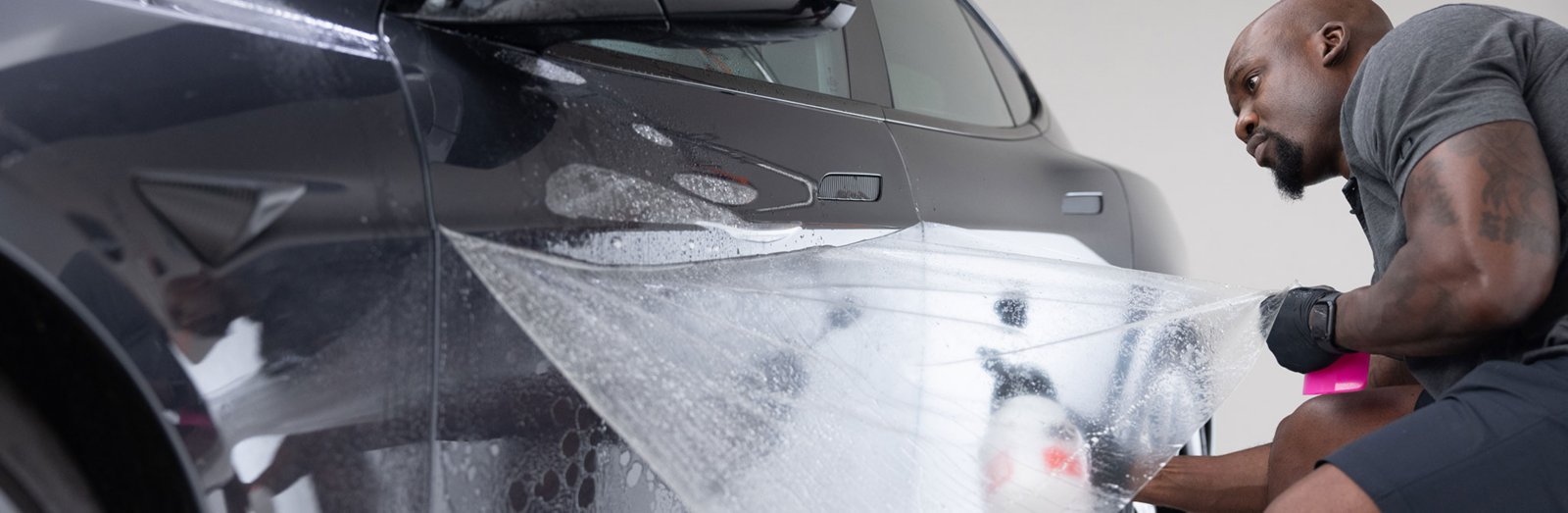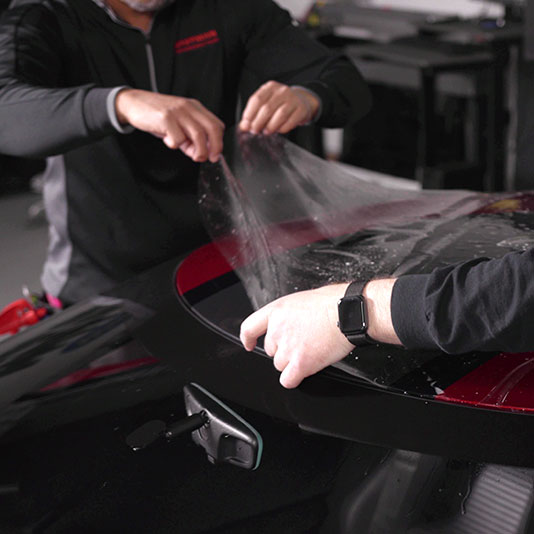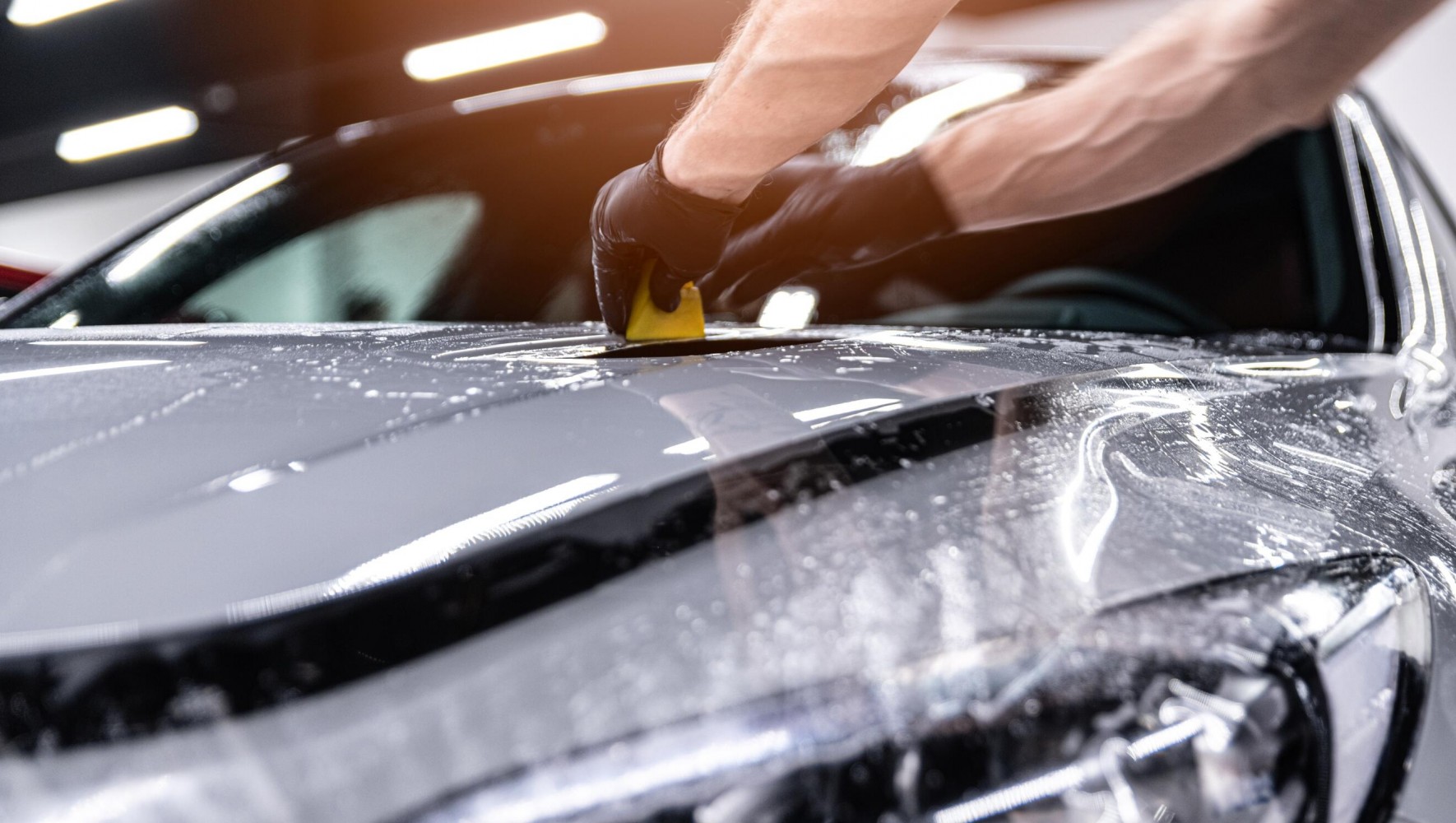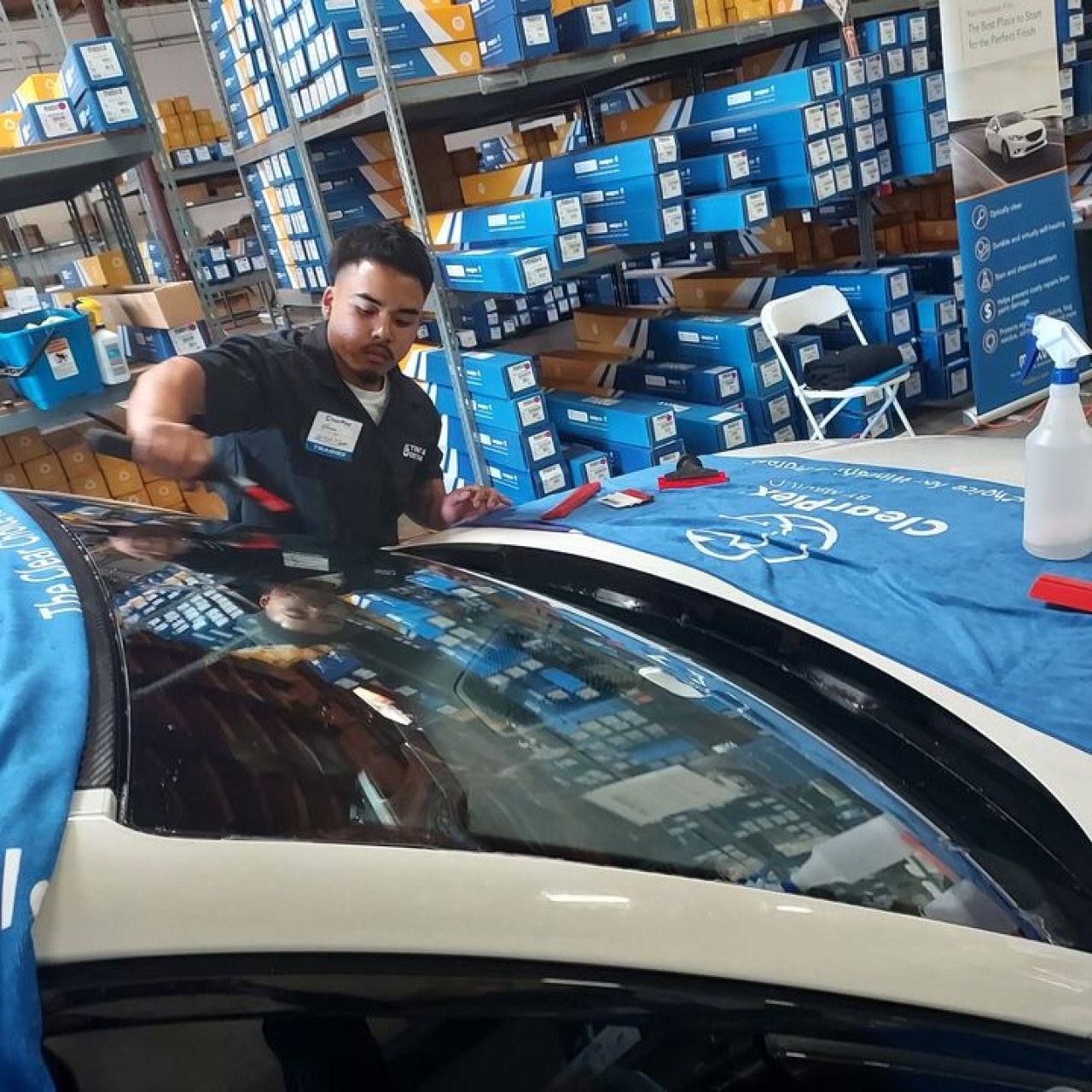
The first question when buying protection film is which surface needs protection. Windshield protection film (WPF) goes on the outside of the front glass; body paint protection film (PPF) protects the painted panels. A product name containing “protection” or “TPU” does not tell you which job it was designed to do.
Choose the application before the material
Madico describes ClearPlex as an exterior windshield film. ExoShield separates its GT3+, ULTRA and SPRINT windshield products from MACH 12 body PPF; its MACH 12 FAQ specifically excludes glass from that PPF’s intended surfaces. When asking for a “front-end package,” have the installer list the windshield separately from the bonnet, bumper and wings. Madico ClearPlex; ExoShield MACH 12.
Read thickness together with construction
The examples below show why polymer names alone are insufficient. ExoShield uses PET for GT3+ and ULTRA, but TPU for SPRINT. Its MACH 12 body PPF also uses TPU, for a different application. ExoShield product FAQ.
| Product | Application | Published material and thickness |
|---|---|---|
| ClearPlex Contour | Windshield | PET-based · 4 mil |
| ExoShield GT3+ | Windshield | PET-based · 5 mil |
| ExoShield ULTRA | Windshield | PET-based · 8 mil |
| ExoShield SPRINT | Windshield | TPU-based |
| ExoShield MACH 12 | Painted body | TPU · 7.6 mil total thickness |
These are the brands’ published descriptions, not a protection ranking. The ULTRA page lists the 5- and 8-mil windshield examples; MACH 12 explicitly labels its figure “total thickness.” Ask whether a quoted figure includes the adhesive and coating, or describes only the substrate. The PPF material-chain guide explains why the finished film involves more than its base polymer.
Plan for curing and wiper care
Arrange installation around a dry-weather break and discuss your driving needs with the installer before booking.
Madico’s January 2026 ClearPlex care guide specifies an initial 3–7 days avoiding rain, high speeds, washing, waxing and wiper use, with two extra days below an average 13°C. It separately says full curing may take 30 days. Afterward, remove debris from the blades, replace damaged wipers and use washer fluid rather than running them dry. It excludes automatic or commercial washes and pressure washing; coating compatibility also needs checking. ClearPlex care guide.
For GT3+ and ULTRA, ExoShield advises avoiding wipers and rain when possible for 48 hours, with curing taking up to seven days. Clean trapped grit from the blades and do not pressure-wash the windshield. MACH 12 instead has a 48-hour no-wash instruction. SPRINT is described as temporary protection whose life depends on conditions and care. ExoShield directs owners to arrange removal when severe scratching or haze limits visibility. ExoShield care instructions.
Put the replacement plan in the quote
Ask for the exact product, protected surface and thickness basis, then the written care instructions and a realistic handover date for your driving schedule. Confirm who will inspect wear, what removal and replacement cost, and whether warranty wording covers film defects, labour or glass damage. Keep those questions separate: a warranty period does not by itself answer when your particular film will need replacement. For the painted panels, use the PPF coverage checklist to define the work.